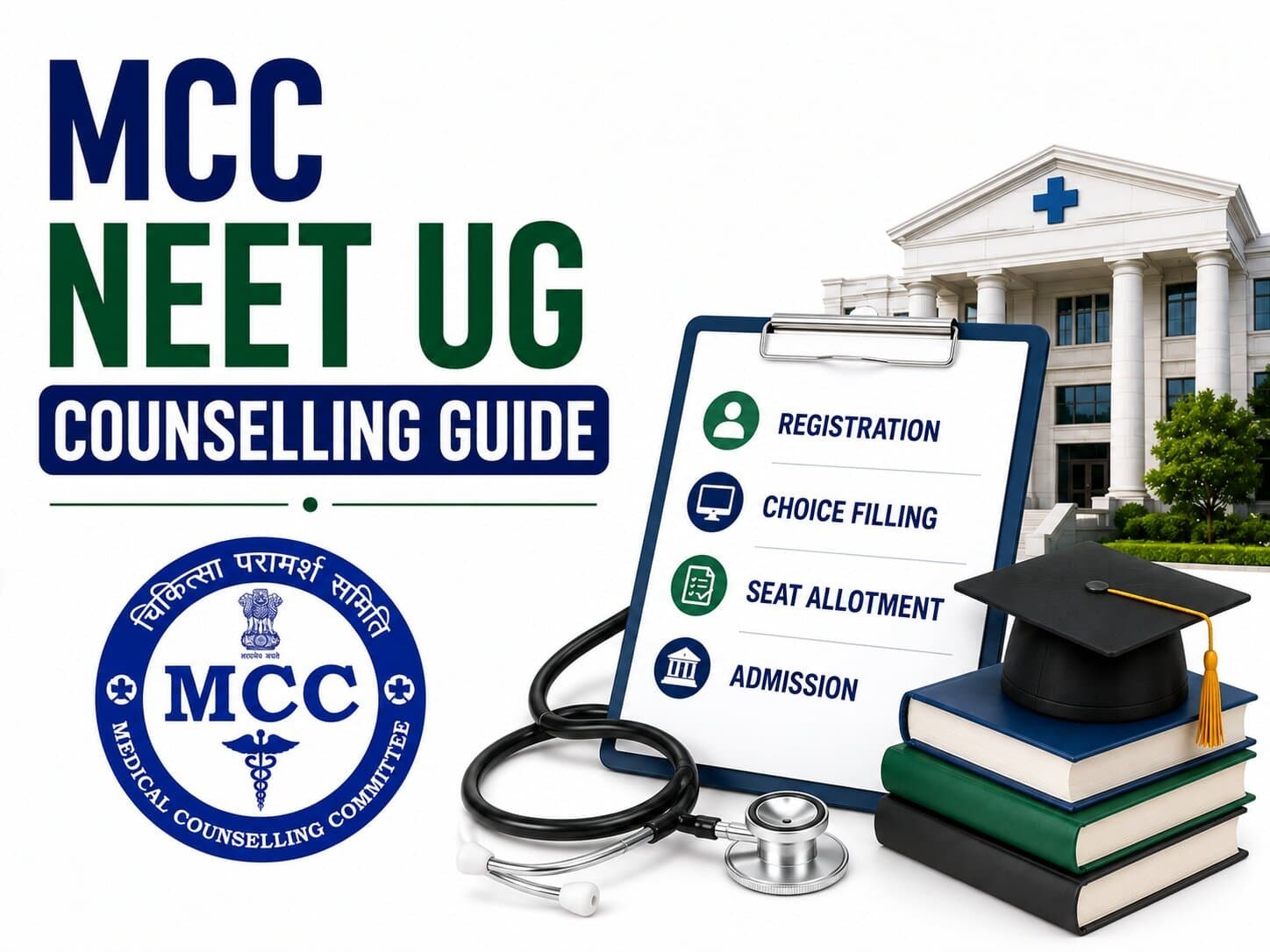
A lot of NEET-qualified candidates only fully understand the counselling landscape once they realise their seat could come from two entirely different authorities, not one. While state boards like WBMCC handle the bulk of seats within a candidate's home state, the Medical Counselling Committee runs a separate, centralised process covering All India Quota seats and admission to some of the country's most sought-after institutions. This guide walks through exactly what MCC counselling covers, how the 2026 process actually works, and what's genuinely new about this year's cycle.
What MCC Actually Covers
MCC, functioning under the Directorate General of Health Services within the Ministry of Health and Family Welfare, conducts centralised counselling for:
15% All India Quota (AIQ) seats in government medical and dental colleges nationwide, open to candidates from any state based purely on NEET All India Rank
100% of MBBS and BDS seats at BHU
100% of seats at all AIIMS campuses
JIPMER Puducherry and Karaikal
ESIC institutions
Deemed and Central Universities
B.Sc. Nursing seats at participating institutions
This is a meaningfully different pool from what a state counselling authority manages, and confusing the two is one of the most common early mistakes candidates make.
MCC vs. State Counselling: Why the Distinction Matters
Most NEET-qualified candidates end up dealing with both MCC and their home state's counselling authority in the same admission season, and treating them as one combined process leads to missed deadlines. West Bengal candidates, for instance, separately navigate WBMCC's own counselling framework for the 85% state quota, running on its own registration and choice-filling schedule, entirely independent of MCC's timeline. A candidate genuinely serious about maximising their options needs to track both processes in parallel, register for both where eligible, and understand that a rank competitive enough for a state quota seat doesn't automatically translate into AIQ competitiveness, since the applicant pools and cutoffs differ.
The 2026 MCC Round 1 Schedule
MCC released its full 2026 counselling schedule on August 1, and Round 1 has been moving on a tight, clearly defined timeline:
Online registration: August 5 to August 12, 2026, with fee payment accepted until 6 PM (server time) on the final day
Seat matrix release for Round 1: August 6, 2026, covering government AIQ seats across MBBS, BDS, AYUSH, and B.Sc. Nursing
Choice filling and locking: August 6 to August 13, 2026, until 11 AM server time
Round 1 result declaration: August 17, 2026
Reporting at allotted institutions: August 18 to August 22, 2026, a five-day window
Round 2 seat matrix and vacancy verification: August 24, 2026
Academic session commencement: September 8, 2026
Final joining deadline after the Stray Vacancy Round: October 10, 2026
Given how compressed this timeline is, candidates who haven't yet completed registration and document preparation for a given round are working against a genuinely narrow window, not a flexible one.
What's Actually New in the 2026 Process
One procedural change this cycle is worth knowing about specifically: MCC has introduced online document verification for candidates who choose the "Float" option after an allotment, reducing the need for immediate physical reporting at that stage. In previous cycles, floating candidates often still needed to manage in-person verification steps even while waiting for a potentially better allotment in a later round. This year's shift toward online verification for that specific group is a meaningful reduction in logistical friction, particularly for candidates whose allotted institution is far from home and who are holding out for a preferred option in Round 2 or Round 3.
Step by Step: How MCC Counselling Works
Register online through the official MCC portal within the announced window, entering NEET roll number, personal details, and category information accurately
Pay the counselling and security fee, which is separate from any state counselling fee and specific to MCC's own process
Review the released seat matrix carefully before filling choices, since it updates round to round as seats fill and new vacancies open
Fill and order choices genuinely by preference, not by perceived safety, since the allotment algorithm works in a candidate's favour only when the ranking reflects real priority
Lock choices before the deadline, understanding that locked choices cannot be edited for that specific round
Check the seat allotment result directly on the official portal once released
Choose to accept, float, or slide, depending on whether the allotted seat is one worth securing immediately or whether holding out for a later round makes more sense
Complete verification and reporting within the specified window, physically or online depending on the option chosen
The Four Rounds, and Why Later Rounds Still Matter
MCC counselling runs across Round 1, Round 2, Round 3, and a Stray Vacancy Round, and a disappointing Round 1 outcome is genuinely not the end of the process. Seats that go unfilled after each round get released again in the next one, sometimes at meaningfully different closing ranks than earlier rounds suggested. The underlying mechanics here closely resemble how mop-up and stray vacancy rounds function in state-level counselling — unfilled seats don't disappear, they resurface, which is exactly why staying engaged through the full cycle, rather than disengaging after one weak round, tends to change outcomes for borderline-rank candidates.
Building Your Choice List for MCC Specifically
The same fundamentals that apply to any counselling choice list apply here too, just against a different, nationally competitive applicant pool. Understanding how your NEET score converts into a realistic estimated rank before filling AIQ choices matters enormously, since national AIQ cutoffs run meaningfully tighter than most state quota cutoffs for comparable institutions. The broader principles around choosing the right medical college based on fit rather than name recognition apply just as much within MCC's pool of AIIMS, JIPMER, BHU, and deemed university options as they do to any state list, and are worth reviewing before choice-filling rather than during it.
Documents and Preparation
Having every required document scanned, verified, and ready before registration opens saves genuine time once the window is live. This complete checklist of documents required for NEET counselling applies across both MCC and state processes, and cross-checking your details against your verified scorecard and answer key before registration avoids mismatches that can delay verification later. Candidates applying under the PwBD category should also be aware that this year's assessment and eligibility certificate requirements apply in broadly similar form across MCC's AIQ process, not just at the state level, so that preparation should happen in parallel with general registration prep.
A Broader Understanding of the Process Helps Here Too
If the general mechanics of registration, choice-filling, and seat allotment still feel unfamiliar, this breakdown of how counselling actually works end to end is worth reviewing before diving into MCC-specific steps, since the underlying logic carries across both centralised and state processes even though the portals and quotas differ. And now that NEET UG 2026 results and cutoffs are public, it's worth benchmarking your own score against this year's actual numbers rather than relying on previous years' closing ranks, which can shift meaningfully cycle to cycle.
Planning for Cost Across Both Processes
AIQ seats at government institutions are generally the most affordable route into a recognised medical college, but candidates weighing MCC's deemed university options against state-level private colleges should compare costs carefully rather than assuming AIQ is always cheaper across every institution type. This comparison of government and private MBBS costs against a state's own seat matrix is a useful reference point, and checking scholarship eligibility through options like the Swami Vivekananda Merit-cum-Means Scholarship early in the process is worth doing regardless of which counselling authority ultimately allots your seat.
Key Things to Remember
MCC handles India's 15% All India Quota seats along with 100% of seats at AIIMS, JIPMER, BHU, ESIC institutions, deemed universities, and B.Sc. Nursing programmes, running entirely separately from state counselling authorities like WBMCC. The 2026 Round 1 cycle moved through registration, seat matrix release, choice filling, allotment, and reporting between August 5 and August 22, with Round 2 vacancy verification following on August 24 and the full process wrapping up with a Stray Vacancy Round before the October 10 final joining deadline. This year's introduction of online verification for Float candidates is a genuine procedural improvement worth knowing about if you're planning to hold out for a better allotment in a later round. The most important practical takeaway is treating MCC and your state counselling process as two parallel, equally important tracks, not one combined system, and preparing documentation and choice-list research for both well before either registration window opens.
This guide reflects MCC's 2026 counselling schedule and process as officially announced. Always verify current dates, fee amounts, and procedural details directly on the official MCC portal (mcc.nic.in), since counselling schedules are subject to revision round to round.
Article Stats
You Might Also Like
What Is the MS Course? A Complete Guide to Introduction, Eligibility, NEET PG Counselling and Preparation
What Is the MD Course? A Complete Guide to Introduction, Eligibility, NEET PG Counselling and Preparation
Tripura MBBS BDS Round 3 Re-Revised Schedule 2026: Choice Filling, Merit List, Allotment and Admission Dates