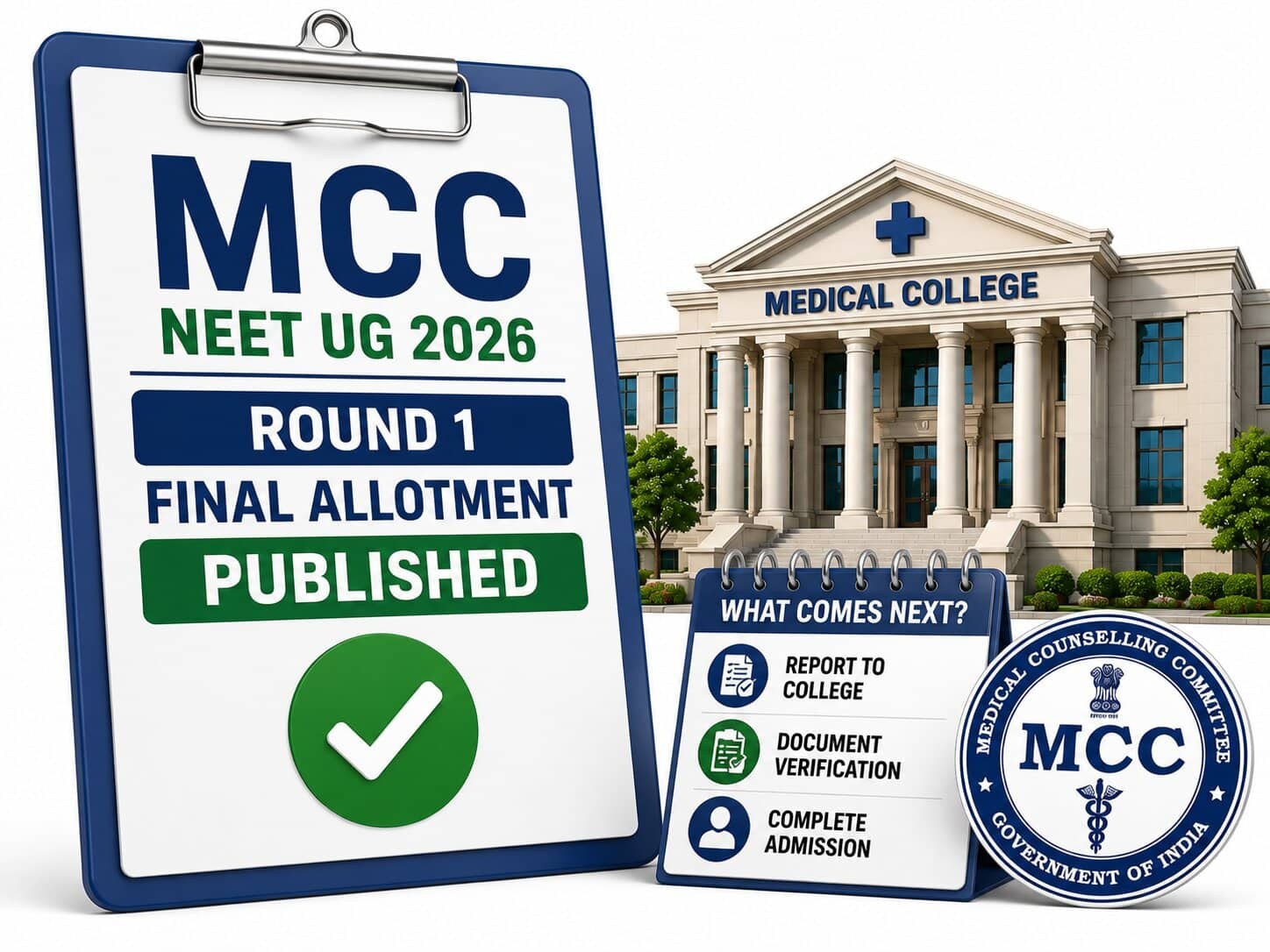
The Medical Counselling Committee has published the Round 1 final allotment result for NEET UG 2026 counselling, and candidates who registered for the All India Quota process can now check their individual seat status on the official portal. This result determines the immediate next step for every candidate differently, depending on whether a seat was allotted, whether it matches genuine preference, and how each candidate intends to proceed into subsequent rounds. Given how tightly Round 1 outcomes shape the rest of the counselling calendar, understanding exactly what this allotment means, and what needs to happen before the next deadline, matters more than simply checking the result and moving on.
What the Round 1 Final Allotment Result Shows
The Round 1 result reflects seat allocation based on the choices candidates locked during registration, matched against their rank, category, and seat availability across participating institutions. This is the first genuine checkpoint in the counselling process, and how a candidate responds to it shapes their standing in every round that follows.
Candidates can check their allotment status directly on the official MCC counselling portal using their registered login credentials
The result indicates whether a seat has been allotted, and if so, specifies the institute, course, and category under which the allotment was made
Candidates who received an allotment matching their genuine first preference are generally advised to proceed directly to document verification and reporting, since holding out for a marginal improvement in later rounds carries its own risk
Candidates who did not receive any allotment in this round remain in contention for subsequent rounds without needing to take any additional action at this stage, though staying alert to upcoming deadlines remains essential
What Candidates Need to Do Immediately
Once the allotment result is checked, the next few days carry firm, non-negotiable deadlines, and missing any one of them can result in the allotted seat being cancelled entirely, regardless of how strong the original allotment was.
Download and carefully review the provisional allotment letter, since this document is required at every subsequent stage of admission, including physical reporting at the allotted institute
Complete document verification and reporting at the allotted institute within the window specified for this round, since failing to report within the given timeframe typically results in forfeiture of the seat
Keep original documents, category certificates, and identification ready in the exact format specified by the allotted institute, since incomplete documentation at the reporting stage can delay or jeopardise admission even when the allotment itself was successful
Candidates who wish to explore a potentially better allotment in later rounds should carefully review the specific rules around retaining or upgrading a Round 1 seat before making that decision, since MCC's rules on floating versus freezing a seat directly affect eligibility for subsequent rounds
Choosing Between Accepting and Waiting for a Later Round
A Round 1 allotment does not have to be the final decision point for every candidate, but treating this choice casually can backfire. Candidates need to weigh the strength of their current allotment against realistic expectations for improvement in Round 2, rather than assuming a better outcome is guaranteed simply by waiting.
Candidates satisfied with their allotted institute and course should generally proceed to confirm and report, since MCC counselling rounds tend to reward decisive action over repeated attempts at optimisation
Candidates hoping for a better allotment should base that decision on realistic data, including how closing ranks moved across previous years' rounds for their target institutes, rather than optimism alone
It helps to revisit how MCC counselling and the broader JoSAA-style round structure typically function before deciding whether to hold out, since the underlying logic of freeze, float, and upgrade decisions across multi-round counselling systems carries similar risk-and-reward trade-offs regardless of which exam or council is involved
Candidates also participating in state-level counselling alongside the All India Quota process should track both calendars closely, since deadlines across the two systems rarely align perfectly and a missed state-level deadline while focused on MCC's timeline is a common, avoidable mistake
What Can Be Done About It
The most important step for every candidate right now is to check the Round 1 result without delay and act on it within the window specified by MCC, since this counselling process moves quickly and rarely offers flexibility once a deadline passes. Candidates with a satisfactory allotment should move directly toward document verification and reporting rather than second-guessing a solid outcome, while those still awaiting a preferred allotment should stay prepared for Round 2 by keeping documents ready and monitoring the portal closely for the next schedule update. For candidates weighing their AIQ allotment against a state quota alternative, it may also help to revisit how regional counselling cutoffs and timelines are shaping up this season, since a clearer picture of both tracks side by side makes the decision to accept, float, or wait considerably easier to make with confidence.
Article Stats