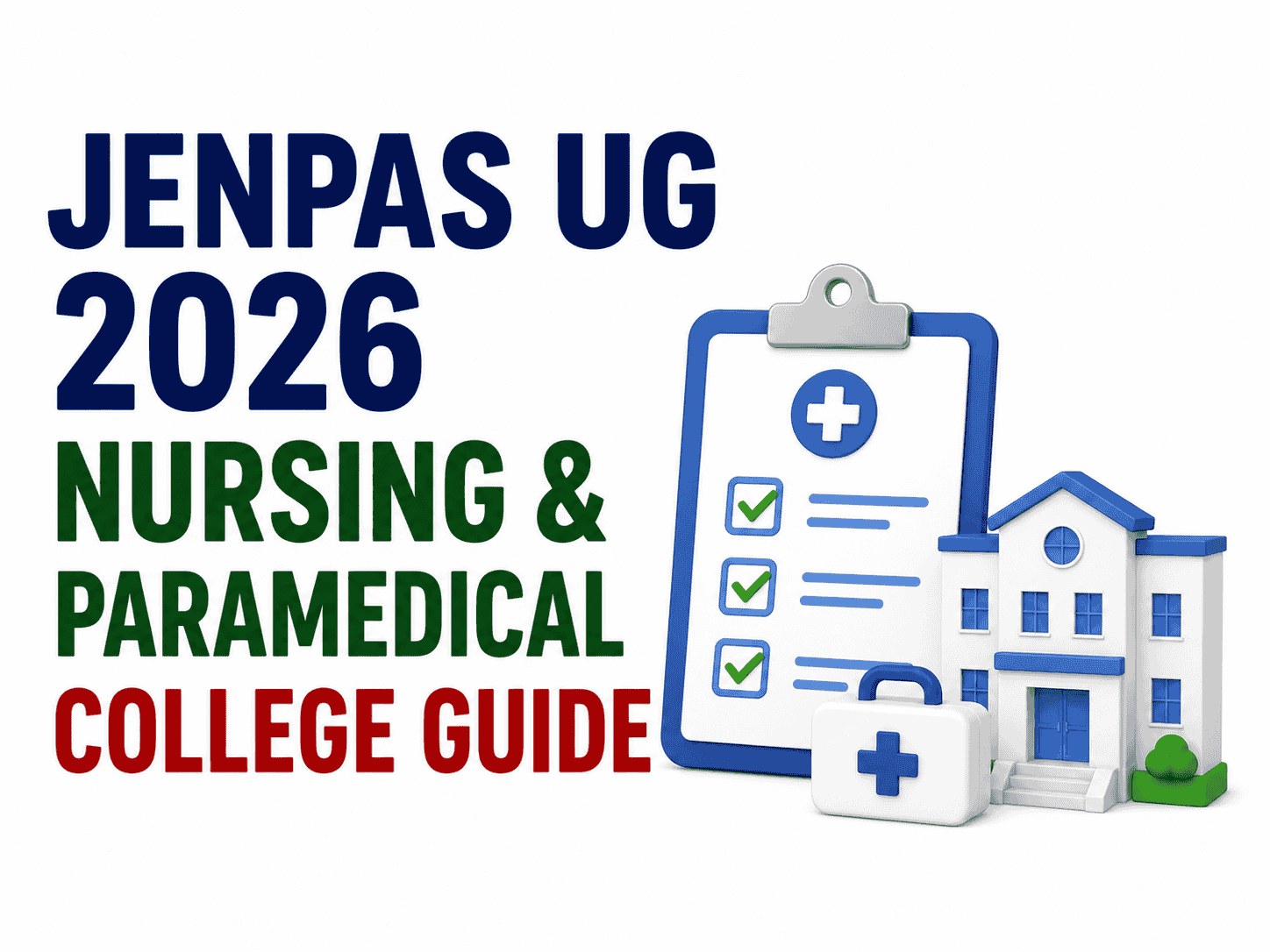
For most JENPAS UG aspirants, the first question after the results are announced is surprisingly simple:
My rank is X. Which college can I get?
It sounds like a straightforward question, but the answer is rarely straightforward.
Every year, thousands of students across West Bengal compete for seats in B.Sc Nursing, Physiotherapy, Medical Laboratory Technology, Critical Care Technology, Operation Theatre Technology, and several other healthcare programs offered through JENPAS UG. While rank undoubtedly plays a crucial role, admission outcomes depend on far more than just a number printed on a scorecard.
Seat availability, category reservations, counselling participation, college preferences, and vacancy movement across rounds all influence final allotments. This is why students with similar ranks sometimes end up in completely different institutions.
Understanding the relationship between rank and college opportunities can help candidates approach counselling with realistic expectations and a stronger strategy.
Why Rank Alone Doesn't Decide Admission
One of the biggest misconceptions among students is believing that rank automatically determines the college they will receive.
In reality, admissions are influenced by multiple variables working together.
These typically include:
General Merit Rank (GMR)
Reservation category
Course preference
Seat matrix
Counselling participation
Choice filling strategy
Vacancy positions
WBJEEB conducts counselling after result declaration, and seat allotment is based on rank, choices filled, and seat availability. Candidates must complete registration, choice filling, and other counselling formalities before seat allocation takes place.
This means that understanding the counselling process becomes just as important as understanding rank itself.
Students who are unfamiliar with how seat allotment works should first review a detailed guide on JENPAS UG counselling, choice filling, and seat allotment procedures before creating their college preferences.
Understanding JENPAS UG Seat Availability
Before discussing rank ranges, it is important to understand the scale of opportunities available through JENPAS UG.
The examination offers admission into nursing, paramedical, and allied health science programs across government and private institutions in West Bengal. Recent seat matrix information indicates that thousands of seats are distributed across multiple healthcare disciplines throughout the state.
These seats are spread across:
Government Nursing Colleges
Government Medical Colleges
Private Nursing Institutions
Allied Health Science Institutes
Paramedical Colleges
Physiotherapy Institutions
Since seat distribution varies by course and institution, admission trends differ significantly between programs.
For example, B.Sc Nursing often witnesses much higher competition than several paramedical streams.
Rank Below 500: Premium Opportunities
Students securing ranks within the top 500 generally find themselves in a strong position during counselling.
At this range, candidates often have access to some of the most sought-after government institutions, especially for B.Sc Nursing and leading allied health science programs.
Possible opportunities may include:
Government Nursing Colleges
Top Government Medical College Nursing Programs
High-demand Allied Health Science Courses
Popular Urban Healthcare Institutions
However, even within this range, choice filling remains important.
A poorly planned preference list can still impact allotment outcomes.
Many students focus only on a handful of institutions without considering backup options, which can create unnecessary complications during counselling.
Rank Between 500 and 1500
This range remains highly competitive.
Students within this bracket often secure quality institutions, though flexibility becomes increasingly important.
Possible opportunities generally include:
Government Nursing Colleges
Selected Government Allied Health Programs
Strong Private Nursing Institutions
Physiotherapy Programs
Medical Laboratory Technology Courses
At this stage, counselling strategy becomes increasingly valuable.
Rather than focusing exclusively on rankings, students should spend time exploring available institutions through dedicated college exploration resources before finalizing preferences.
A well-researched choice list often produces better outcomes than a rank-focused approach.
Rank Between 1500 and 3000
Many students become anxious when their ranks fall within this range.
In reality, numerous admission opportunities continue to exist.
Candidates frequently secure seats in:
Government institutions with later-round vacancies
Reputed private nursing colleges
Allied health science programs
Emerging healthcare institutions
Specialized paramedical courses
This is also the range where counselling participation across multiple rounds becomes extremely important.
Students who remain active throughout Round 1, Round 2, and subsequent vacancy rounds often discover opportunities unavailable during the initial allotment stages.
Rank Between 3000 and 6000
Students within this range should approach counselling with realistic expectations while remaining optimistic.
Admission opportunities typically remain available through:
Private Nursing Colleges
Allied Health Science Programs
Paramedical Courses
Later Counselling Rounds
Vacancy-Based Allotments
Many students mistakenly assume that higher ranks eliminate admission possibilities.
In reality, seat movement during counselling often creates new opportunities.
Historical counselling trends consistently demonstrate that candidates participating actively throughout the entire process perform better than those who withdraw early.
Rank Above 6000: Are Opportunities Still Available?
Absolutely.
Although competition becomes more intense, opportunities continue to exist.
Students should focus on:
Private Institutions
Less Competitive Programs
Vacancy Rounds
Mop-Up Counselling
Newly Available Seats
Many successful admissions occur during later counselling stages when candidates with better ranks withdraw, upgrade, or fail to report.
Mop-up rounds, in particular, can create significant opportunities for candidates who remain attentive throughout the counselling cycle. Similar patterns have been observed across previous counselling cycles.
Nursing vs Paramedical: Which Stream Has Greater Competition?

This is one of the most common questions among JENPAS UG aspirants.
Generally speaking, B.Sc Nursing attracts the highest level of competition.
Several factors contribute to this:
Strong employment opportunities
Government sector demand
Higher public awareness
Structured career pathways
Further education options
Paramedical programs remain competitive as well, but admission patterns often differ depending on the specialization.
Popular paramedical disciplines include:
Medical Laboratory Technology
Physiotherapy
Critical Care Technology
Operation Theatre Technology
Radiology and Imaging
Dialysis Technology
Students should evaluate courses based on career goals rather than popularity alone.
How Choice Filling Can Change Your Admission Outcome
Perhaps no stage influences admission outcomes more than choice filling.
Two students with identical ranks can receive completely different allotments depending on how they structure their preferences.
A strong choice list usually includes:
Dream institutions
Competitive opportunities
Realistic colleges
Backup options
Students often make the mistake of filling only prestigious colleges.
While ambition is important, practical planning often leads to better results.
Candidates seeking a deeper understanding of admission planning strategies can benefit from studying broader medical counselling and seat allocation frameworks, particularly those used in competitive healthcare admissions.
Many of the same principles apply to JENPAS UG counselling as well.
Why Previous-Year Cut-Offs Should Be Used Carefully
Students frequently search for exact rank-versus-college predictions.
The problem is that admission trends change every year.
Several factors influence cut-offs:
Number of applicants
Examination difficulty
Seat availability
Reservation patterns
Counselling participation
Vacancy movement
As a result, previous-year data should be treated as a reference rather than a guarantee.
The smarter approach is identifying admission ranges rather than relying on exact cut-off figures.
Government vs Private Institutions
Students often become overly focused on securing government seats.
While government institutions offer significant advantages, private institutions should not be dismissed automatically.
Government colleges typically provide:
Lower fees
Established reputation
Strong clinical exposure
Long-standing academic systems
Private institutions may offer:
Modern infrastructure
Specialized facilities
Additional academic resources
Smaller batch sizes in some programs
The best decision depends on individual goals, financial considerations, and career plans.
Documents You Should Prepare Before Counselling
Many admission delays occur because students focus exclusively on rank while neglecting documentation.
Candidates should prepare:
Admit Card
Rank Card
Class 10 Marksheet
Class 12 Marksheet
Identity Proof
Passport Photographs
Category Certificate (if applicable)
Domicile Documents (if required)
Preparing documents early helps ensure a smoother counselling experience.
Financial Planning Matters Too
While rank determines opportunities, affordability influences final decisions.
Students should consider:
Tuition Fees
Hostel Charges
Living Expenses
Academic Costs
Scholarship Opportunities
Before finalizing admissions, exploring available healthcare education scholarships and financial aid opportunities can help families make more informed decisions.
Many students discover funding options only after counselling has concluded.
Staying Updated During Counselling Season
Admission opportunities often depend on timely information.
Students should regularly monitor:
Counselling schedules
Seat matrix updates
Vacancy notifications
Allotment announcements
Reporting instructions
Even strong ranks can lose value if candidates miss important deadlines.
Following reliable sources for latest admission updates, counselling notifications, and healthcare education news can help students stay informed throughout the admission cycle.
Final Thoughts
JENPAS UG rank is undoubtedly important, but it is only one part of the admission equation.
The students who secure the best outcomes are often those who combine a good rank with smart counselling decisions.
To maximize your chances:
Understand rank trends realistically
Research colleges thoroughly
Participate in all counselling rounds
Create balanced preference lists
Monitor updates consistently
Keep documents ready
Explore scholarship opportunities
A rank creates possibilities.
How effectively you use those possibilities during counselling is what ultimately determines which nursing or paramedical college you join in 2026.
Article Stats
You Might Also Like
What Is the MS Course? A Complete Guide to Introduction, Eligibility, NEET PG Counselling and Preparation
What Is the MD Course? A Complete Guide to Introduction, Eligibility, NEET PG Counselling and Preparation
Tripura MBBS BDS Round 3 Re-Revised Schedule 2026: Choice Filling, Merit List, Allotment and Admission Dates