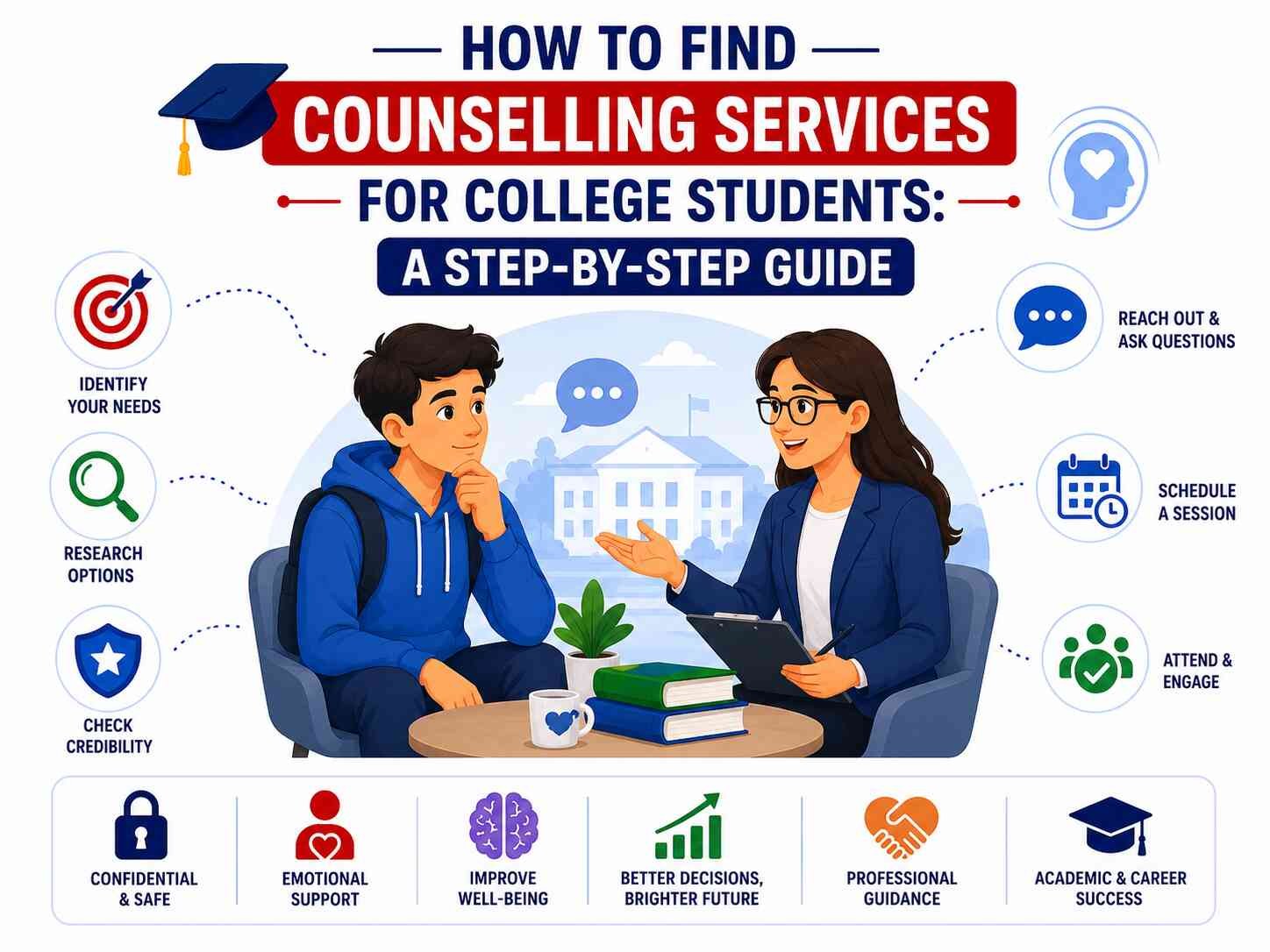
College life is often described as one of the most exciting phases of a person’s journey. It brings new opportunities, greater independence, and the chance to build a future. At the same time, it can also introduce challenges that many students are not fully prepared for. Academic pressure, career uncertainty, financial stress, social adjustments, relationship issues, and mental health concerns can quickly become overwhelming if left unaddressed.
This is where counselling services for college students play a vital role. Professional counselling provides students with a safe and supportive environment where they can discuss their concerns, develop coping strategies, and receive guidance tailored to their individual needs.
The challenge, however, is that many students are unsure where to begin. They know they need support but don't know how to identify the right counselling resources or determine which services best match their situation.
If you're searching for counselling support during your college years, this guide will walk you through the process step by step.
Understand Why You Need Counseling
Before beginning your search, it's important to understand what kind of support you're looking for.
Many students assume counseling is only for serious mental health issues, but that's far from the truth. Counseling can help with a wide range of concerns, including stress management, anxiety, depression, academic struggles, low confidence, relationship difficulties, career confusion, homesickness, and adjustment challenges.
Some students seek counseling because they feel overwhelmed by coursework. Others may need support navigating personal relationships or making important career decisions. Understanding the reason behind your search can help narrow down the type of counseling service that will be most beneficial.
You don't need to wait until a problem becomes severe before seeking help. In fact, early intervention often leads to better outcomes and a healthier college experience.
Start with Your College Counseling Center
The first place most students should explore is their own institution.
Many colleges and universities provide dedicated counseling services for college students through on-campus wellness centers or student support departments. These services are often included as part of student fees, making them highly accessible and affordable.
Campus counseling centers typically offer individual counseling sessions, group therapy, stress-management workshops, crisis intervention, and mental health resources.
One major advantage of using campus services is convenience. Counselors are already familiar with the academic environment, student challenges, examination stress, and campus culture. This allows them to provide guidance that is directly relevant to student life.
Even if your college has limited counseling resources, the staff can often refer you to trusted external professionals if additional support is needed.
Explore Online Counselling Platforms
Technology has significantly expanded access to mental health support.
Today, many students prefer online counseling because it offers flexibility, privacy, and convenience. Virtual counseling allows students to connect with licensed professionals from their dorm rooms, apartments, or homes without needing to travel.
This option is particularly helpful for students who have busy schedules, live away from campus, or feel more comfortable speaking from a familiar environment.
Online platforms often provide video sessions, phone consultations, text-based support, and flexible appointment options. Some even specialize in student mental health concerns, making them a valuable resource for college-aged individuals.
Before choosing an online counselor, make sure the platform clearly displays professional qualifications, licensing information, privacy policies, and available services.
Check Counselor Qualifications and Expertise
Not every counselor specializes in the same areas.
While searching for counseling services, take time to review the professional background of potential counselors. Look for licensed psychologists, therapists, counselors, or mental health professionals with experience working with students and young adults.
Different professionals may focus on different areas, such as:
anxiety and stress management
academic pressure
depression
relationship counseling
career guidance
trauma recovery
self-esteem development
Choosing someone whose expertise aligns with your specific concerns can significantly improve the effectiveness of counseling.
A strong professional background doesn't automatically guarantee the perfect fit, but it does provide reassurance that you're receiving support from a qualified expert.
Read Reviews and Student Experiences
Student feedback can often provide insights that official websites cannot.
While confidentiality prevents counselors from sharing detailed client stories, many counseling platforms and mental health providers receive reviews from students who have used their services.
Reading reviews can help you understand factors such as communication style, responsiveness, appointment availability, and overall client satisfaction.
However, it's important not to rely solely on reviews. Counseling is highly personal, and what works well for one student may not necessarily work for another.
Use reviews as one factor among many when making your decision.
Consider Accessibility and Availability
The best counsellor in the world may not be helpful if you can't consistently access their services.
When evaluating counselling options, think about practical considerations such as appointment availability, session frequency, waiting times, location, and scheduling flexibility.
Many college students balance classes, internships, part-time jobs, and extracurricular activities. Finding a counsellor whose schedule aligns with yours can make it much easier to maintain regular sessions.
Consistency is often one of the most important factors in successful counselling outcomes. Choosing a service that fits naturally into your routine increases the likelihood that you'll stay committed to the process.
Understand the Costs Involved
Cost is often a concern for students, but there are more options available today than many people realize.
Campus counselling centres frequently offer free or low-cost services. Some colleges include counselling as part of student support programs. Community organizations, non-profit groups, and mental health initiatives may also provide affordable counselling options.
For students seeking private counselling, it's important to understand pricing structures before committing to a provider. Ask about session fees, package plans, cancellation policies, and insurance coverage if applicable.
Many counsellors also offer sliding-scale fees based on financial circumstances, making professional support more accessible for students working within a limited budget.
Schedule an Initial Consultation
Finding the right counsellor often requires a conversation before making a long-term commitment.
Many counselling providers offer introductory consultations that allow students to ask questions, discuss concerns, and understand how the counselling process works.
This first interaction can be extremely valuable.
Pay attention to how comfortable you feel during the conversation. Do you feel heard? Does the counsellor communicate clearly? Are they genuinely interested in understanding your situation?
The relationship between a counsellor and student is built on trust. Even highly qualified professionals may not always be the right fit for every individual.
It's perfectly acceptable to explore different options until you find someone you feel comfortable working with.
Give the Process Time
One common misconception among students is that counselling should produce immediate results.
While some people experience quick improvements, meaningful growth often takes time. Counselling is not about receiving instant solutions. It's about developing healthier thought patterns, stronger coping mechanisms, and greater self-awareness over time.
The first few sessions are often focused on understanding your situation and building a foundation for future progress.
Patience and consistency are important. The more open and engaged you are during the process, the more valuable counselling tends to become.
Remember that seeking help is not a sign of weakness. It's a proactive step toward personal growth, emotional well-being, and long-term success.
Conclusion: Taking the First Step Matters Most
Finding the right counselling services for college students doesn't have to feel overwhelming. Once you understand your needs, explore available resources, and evaluate your options carefully, the process becomes much more manageable.
Whether you choose your campus counselling center, an online platform, or a private professional, the most important step is simply getting started.
College is a period of growth, change, and self-discovery. Challenges are a natural part of that experience. Having the right support system can make those challenges easier to navigate while helping you build resilience, confidence, and emotional well-being along the way.
The best counselling service isn't necessarily the most expensive or the most popular. It's the one that helps you feel supported, understood, and empowered to move forward with confidence.
Article Stats