Overview
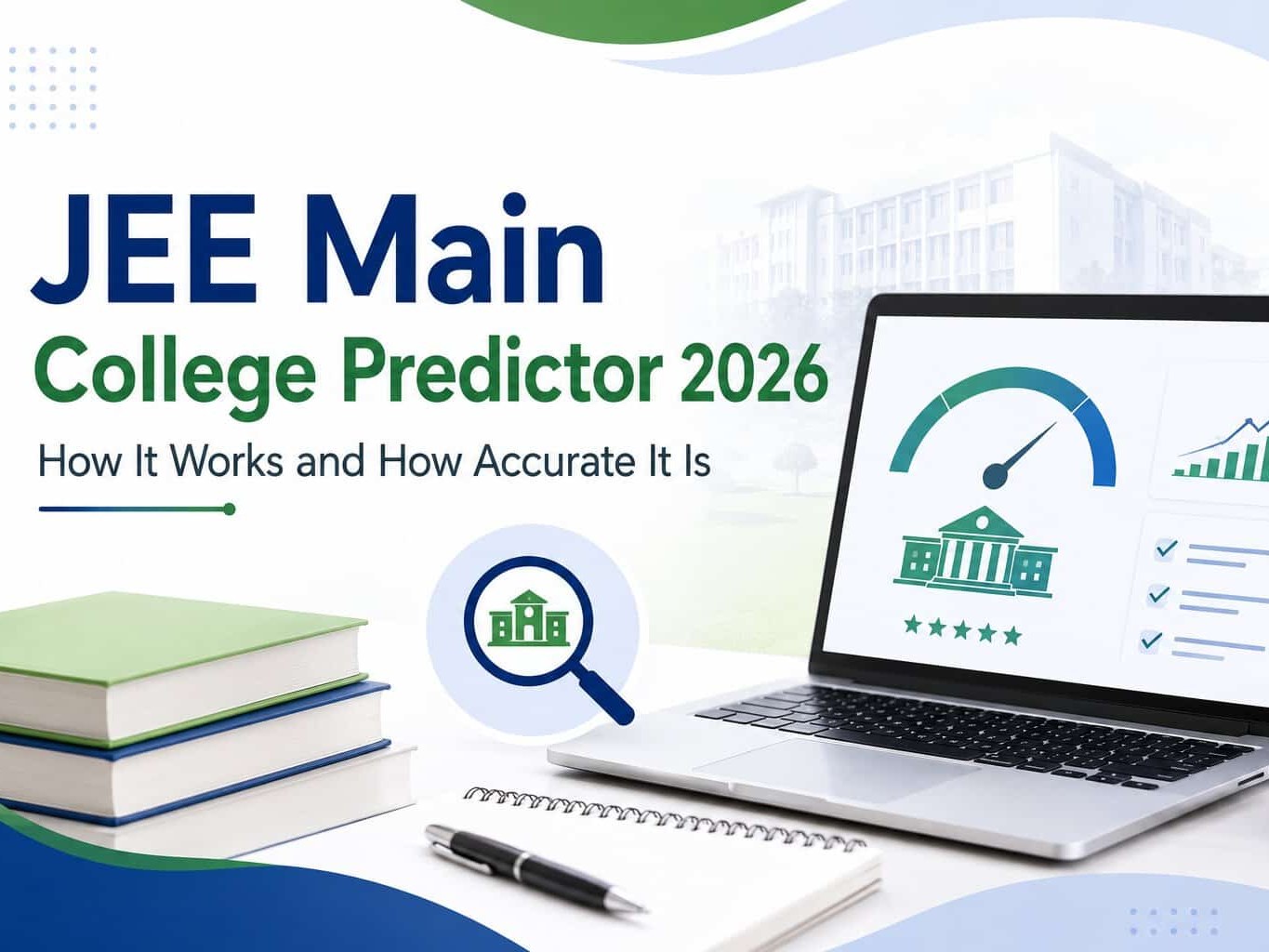
A JEE Main College Predictor 2026 is an online tool that estimates which engineering colleges and branches a candidate may realistically get into, based on their JEE Main rank or percentile, category, and home state. These tools have become one of the first things aspirants turn to right after results are declared, since JoSAA's official seat matrix and multiple counselling rounds can otherwise feel overwhelming to interpret on your own.
Most JEE Main College Predictor 2026 tools work by comparing a candidate's rank against historical opening and closing ranks from previous JoSAA counselling rounds, then projecting a likely range of eligible colleges and branches for the current admission cycle.
Type
This is a data-driven, rank-based estimation tool, not an official admission or allotment platform.
It is typically offered as a free online tool by educational platforms, coaching institutes, and counselling service providers.
It covers predictions across NITs, IIITs, GFTIs, and centrally-funded technical institutes admitting through JoSAA using JEE Main rank.
How a JEE Main College Predictor Actually Works
The core input is your JEE Main rank or percentile, along with your category (General, OBC-NCL, SC, ST, EWS) and home state, since NIT seat allocation depends heavily on the Home State/Other State quota split.
The predictor cross-references this input against a database of previous years' opening and closing ranks for every college, branch, and category combination from actual JoSAA counselling rounds.
Based on this comparison, the tool generates a list of colleges and branches where your rank would likely have secured a seat in a similar previous-year scenario, often sorted by round number (Round 1 through the final round) since closing ranks shift as rounds progress.
Some more advanced predictors also factor in the total number of registered candidates for the current year, recent trends in seat additions or reductions, and shifts in category-wise reservation percentages to refine their estimate beyond a simple historical lookup.
Key Features to Look For in a Good Predictor
A reliable JEE Main College Predictor 2026 should use multiple years of historical data, not just the most recent cycle, since a single year's cutoffs can be unusually high or low due to one-off factors like a particularly tough or easy paper.
It should let you filter results by category, home state quota, and specific institute type (NIT, IIIT, GFTI), since a generic, unfiltered prediction is far less useful than one tailored to your specific eligibility.
It should clearly show round-wise historical cutoffs (Round 1 vs. the final round), since your actual chances change meaningfully depending on which round you're being allotted in.
It should be transparent about being an estimate, not a guarantee - a predictor worth trusting will say so explicitly rather than presenting results as certain outcomes.
How Accurate Is a JEE Main College Predictor, Really?
College predictors are fundamentally probabilistic tools, not precise forecasting instruments - they estimate likelihood based on historical patterns, and actual outcomes can and do deviate from these estimates.
Accuracy tends to be reasonably strong for colleges and branches in the middle of the competitiveness spectrum, where cutoff ranks have historically been more stable year over year.
Accuracy tends to be weaker at the extreme ends - for the most sought-after branches at top NITs (where a handful of rank differences can shift outcomes significantly) and for years where the total number of candidates or available seats changes substantially from the previous cycle.
Predictions also become less reliable further out from the actual counselling season, since the underlying JoSAA seat matrix, quota structure, or even newly added institutes can shift the numbers a predictor is comparing against.
A predictor cannot account for individual choice-filling strategy, meaning two candidates with identical ranks can end up with very different final allotments depending purely on how they ordered and filled their own preferences.
What to Do Now
Use a JEE Main College Predictor 2026 as a starting reference point for building your shortlist, not as a final decision-making tool on its own.
Cross-check predicted colleges and branches against the actual, official JoSAA opening and closing rank data for at least the last two to three years, rather than relying on a single predictor's output alone.
Run your rank through more than one predictor tool where possible, since different tools may weight historical data slightly differently, and comparing results can highlight where estimates genuinely agree or diverge.
For a more grounded, current picture, comparing verified recent cutoff trends across your shortlisted colleges alongside any predictor's output can help you build a more realistic, well-rounded choice list.
Remember that your actual JoSAA choice-filling strategy - the order in which you rank your preferences - matters just as much as the prediction itself in determining your final allotment.
Key Things to Remember
A JEE Main College Predictor 2026 estimates likely colleges and branches using your rank, category, and home state, compared against historical JoSAA cutoff data.
Predictors work by matching your input against previous years' round-wise opening and closing ranks, not through any official or guaranteed calculation.
Accuracy is generally stronger for mid-range colleges and branches, and weaker for the most competitive top-tier seats or in years with significant changes to seat count or candidate volume.
Predictors are a planning aid, not a substitute for checking official JoSAA data or building your own well-considered choice-filling strategy.
This article explains the general working and reliability of JEE Main College Predictor tools. Candidates should always verify actual admission chances against official JoSAA seat matrix and cutoff data, since predictor tools provide estimates only, not guarantees.
Article Stats